Hello & Welcome!

This is the new home for my online Blog, I'll update and add to it from time to time with posts of interest to me, and hopefully that will interest you also!
This is yet another learning curve to me, so hopefully there will be various improvements as I go along in areas of layout, variety of content, narrative and hopefully photographic imagery - Please revisit and comment as often as you like :)

Sunday, 30 June 2013

Talk to the tail - A few friends and a trip to Leighton Moss RSPB


Leighton Moss RSPB

The end of June should be a time of blazing sunshine, fledglings & wildflowers, so a trip to the RSPB reserve at Leighton Moss in the Lake District was full of promise. But as we know, Spring is running late this year!

The bird count started as soon as I parked up with Collared Dove and a very cheeky Robin putting the first appearances. The new ‘touch garden’ to the rear of the reception building is a very pleasant addition to this reserve, being an ideal meeting and eating area.
En route to the first hide and the first of the fledglings was seen - a brown speckled Robin being escorted by one of its parents. It was along this section that a Chiff-chaff was also heard calling. All the hides at LM seem to have been replaced or refurbished since my last visit, and at Lillians Hide there was a live-feed link from a Marsh Harrier nest somewhere out in the vast reed-beds, close-ups of a chick being fed providing a good talking point amongst the gathered birdwatchers. 


Seeing several adults patrolling the reeds from various vantage points during the course of the day was a real treat. The noisome Black-headed Gulls were extremely vocal during throughout the trip and they seemed to have young in all stages of development, from fluffy chicks to fully fledged juveniles. 


From Tim Jackson Hide we saw Grey Heron, Little Egret, Black-tailed Godwit, Lapwing, & Greylag Goose before being treated to excellent views of one of the reserves female Red Deer gracefully waded across the shallow water between the standing reeds.

Walking along the causeway out to Griesdale Hide a Reed Warbler was heard singing clearly and after several minutes it ventured high enough up the 6’+ growth of reeds to give good views. 
Once in the hide an adult Moorhen was escorting 2 tiny black fluffy chicks across the mud-flat area directly in front of the windows whilst an adult Coot with a huge single ‘chick’ emphasised just how mixed up the seasons have been this year. From here two Mute Swans also gave good views, whilst further out a Reed Bunting was picked out in the distance, as were Tufted Duck, Shoveler, Teal, and Gadwall already in eclipse plumage. Small numbers of Swift were also seen. It was from here that emotions became mixed as one of the Marsh Harriers was clearly seen making a distant kill, and carrying it’s (unidentified) prey off to an awaiting family. Walking back through the wooded area we had good views of Tree-creeper and both Great & Blue Tit feeding their respective fledglings.

Lunch-break was taken near the feeding station back at the Scented /touch garden and we were plagued by Mallard whilst watching Great Tit, Blue Tit, Coal Tit, Willow Tit, Bullfinch, Greenfinch, Nuthatch, Chaffinch & a Lesser-Spotted Woodpecker all availed themselves of an ample supply of free food.

After lunch, the sun finally broke through as we headed out towards Jenny Brown’s Point and whilst walking, were buzzed by good number of Swallows as the adults strove to feed their fledglings perched on the barbed wire fences. 

A Buzzard was spotted circling above the distant wooded hillside & Shelduck could be seen out towards the incoming tide-line. Carrion Crow were spotted in the fields amongst the grazing sheep and Lapwing were again seen here although in lower numbers. Oystercatcher were first heard and eventually spotted with their distinctive plumage. A Pheasant was also heard calling from the woods and a Skylark was heard as we walked back to the car park where another Greenfinch was seen singing. As we walked out towards Allen Hide, large numbers of nest boxes were spotted to the far side of the fields, hopefully they will serve to attract Tree Sparrows in the not too distant future, sadly there was no sign of activity in them this year. It was along this section that Red-backed Shrike had been reported only 2 days previously, but our only find was a young Whitethroat, perched high on an Elder twig. Allen Hide proved disappointing with a small colony of Black-Headed Gulls having taken up noisy residence, a single Redshank and a sleeping Oystercatcher being the extent of our spots. 
Onwards to Eric Morecambe Hide, and the incoming tide seemed to have pushed a few more waders inland. 
Good numbers of Redshank, Lapwing and Black-tailed Godwit and Pied Wagtail all gave excellent views before we again headed for the cars. As we walked back along the path a scattered group of fledgling Sedge Warblers were spotted less than 3’ from the path and afforded several excellent photo opportunities – for me this was the highlight of the day. 
Leaving the young to be fed, a Wren was briefly spotted in a small wooded corner before a Goldfinch was seen high on a bough and a Curlew flew overhead calling loudly. Heading off towards the Public Hide, I spotted a fearsome-looking Diving Beetle nymph (Dytiscus Marginalis) on the path, probably dropped by one of the avian inhabitants. Once at the hide we saw only more BH Gulls before venturing to the furthest vantage point on the reed-beds at Lower Hide. Along the path we commented on the high numbers of yellow Flag Iris, wild Orchids, Ragged Robin and Angelica. Once at the hide we found Cormorant and had more good views of Sedge Warbler before one of the resident Marsh Harriers came over. A Sand Martin was also seen amidst a large number of hunting Swifts but no one else managed to pick it out. Heading back to the cars before departing, a young Magpie gave good views as it sat in a path-side tree.


45 spots and 3 ‘heards’. All in all, not a bad days birding!

Kaz


Sunday, 9 June 2013

Bempton Cliffs

And so Spring 2013 comes around, finally, the inland migrants have well and truly arrived. The seabirds however seemed very late coming in to nest and reports of low Puffin numbers were causing particular concern all around the UK coast. It was therefore with some trepidation that I ventured over to the famous Gannet colony at Bempton Cliffs near Scarborough on the first weekend in June.

The weather report was promising, a late arriving Spring was actually feeling very summery, and the previous few days had seen glorious sunshine across the country.

On the winding roads en route to Bempton, a small bird perched on the telegraph wires drew our attention.
 It was a 'lifer' for me, my first ever Yellowhammer! Just a shame that the promised sunshine hadn't arrived in time to highlight his brilliant colouring!

But Bempton is all about Gannets, the immense cliffs provide both nest sites and up-draughts, for these fantastic birds to soar and glide effortlessly. The suspense rises as you walk from the car park towards the cliff path - you can smell seabird colonies from a great distance! We weren't going to be disappointed, and as we neared the edge,  birds could clearly be seen circling as they returned to their territories.


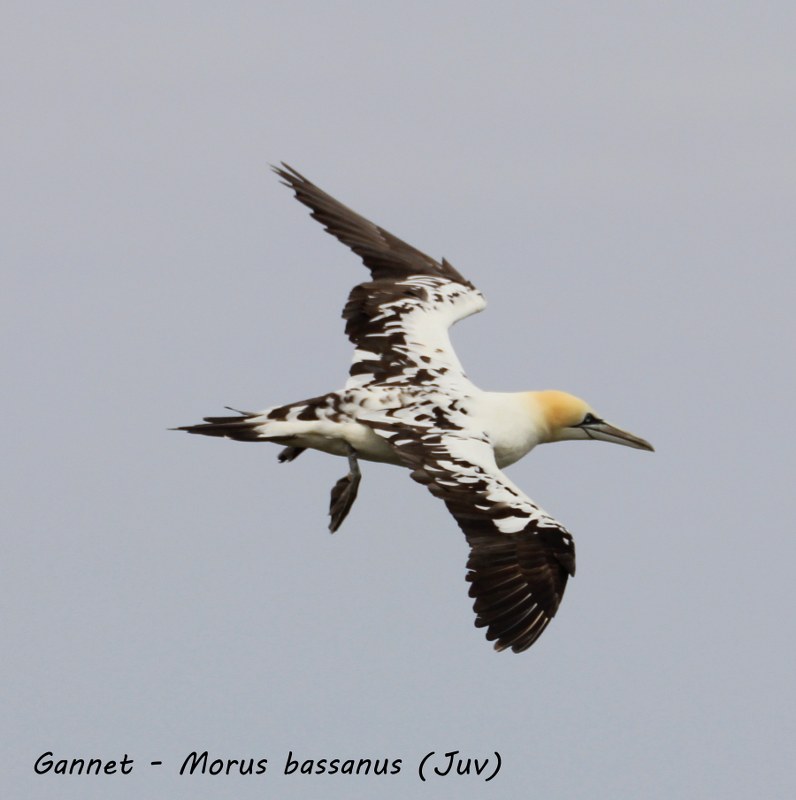
Juvenile Gannets are clearly identifiable by the black markings on their wings and backs, although this one seemed to be sporting more black than most!


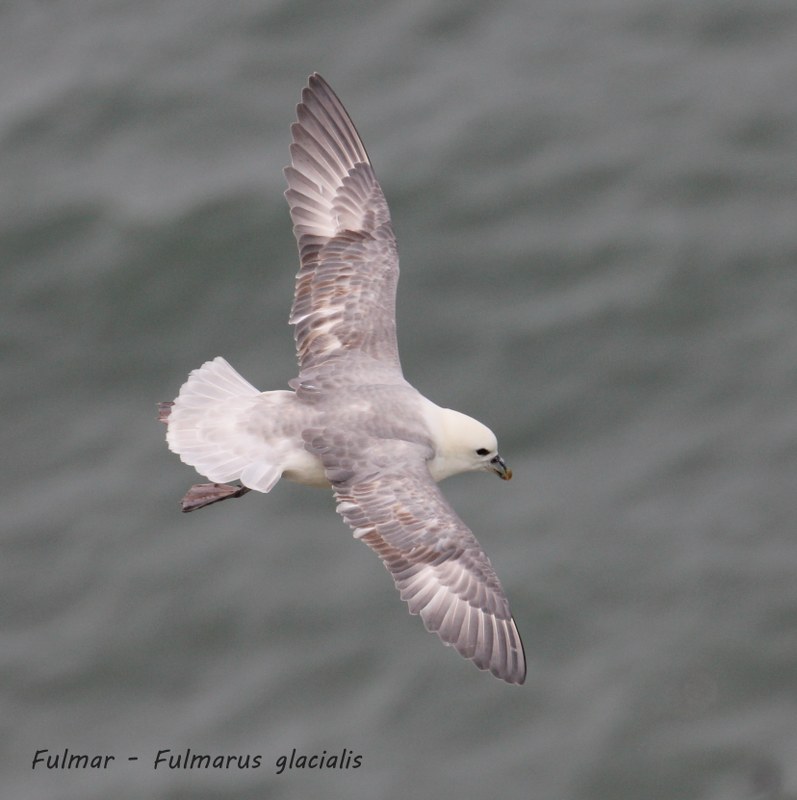
Amongst the many Gannets were a small number of Fulmar, and although I have been to Bempton previously I don't recollect seeing them before.


The buildings at Bempton are home to a growing colony of Tree Sparrows, and the clay roof-tiles are honeycombed with small holes which these charming little birds have commandeered for nesting in!


Such a huge expanse of cliff space is a very des-res for more than just Gannets, and Razorbill are also present in good numbers, the elegant white pin-stripe markings along the beak are a dead give-away to ID'ing these birds.


Guillemots on the other hand lack the white markings of Razorbills, and have an altogether more streamlined beak and chiselled 'eyebrow' in their chocolate brown head and back plumage.


Spring is surely the best time to hear and see birds in their prime, immaculate plumage displaying the heightened colours required to attract a mate are eye-catching in many of our often overlooked 'garden' birds, but this male Chaffinch was showing himself well less than 15' from us!


 We'd heard rumours of low Puffin counts from various sources before we arrived at Bempton, but the Puffins themselves clearly hadn't read those reports - a good number of these colourful & comical looking little birds were charging backwards and forwards to their roosts or perching precariously on seemingly impossibly narrow ledges!


Despite the earlier rumours of "only one" or "only a couple" It was thankfully clear that these charming little birds were merely another of the many 'late arrivals' for the chaotic and disjointed 2013 breeding season.


Bempton Cliffs is surely one of my favourite sea-birding venues, being able to get so close to such huge numbers of our most iconic seabirds is a true privledge. One that I hope to be able to return to time and again, for many years to come.


Wednesday, 16 May 2012

'kin'fisher!

As some of you will know, I've long considered the Kingfisher - Alcedo atthis to be my 'bogey bird' the one I could never find, the one which is always there minutes before I arrive at a site, or shows up just after I leave.

This enigmatic resident bird grows to around 15cm and can allegedly be seen around the country and throughout the year. They nest in March-April with the first young being seen around April-May. The adults will chase the young away from the nest site as soon after they fledge as possible, to preserve the fish stocks in their territory, and start with another brood - and although 3 broods a year is not unusual - mortality rates in the young are high.

This year started off similarly, following up rumours of Kingfishers at 2 of my local nature reserves proved fruitless. Travelling further afield was likewise without result. Recent rumours of a nest site about 15 miles from home were more promising, coming from someone I have long respected for his environmental awareness, knowledge and understanding of a huge range of wildlife orientated subjects be they flora or fauna. He had introduced me to a photographer friend of his called Mick who had a particular interest in Kingfishers - promising indeed!

The habitat:- a fairly quiet stretch of river, combining a variety of extensive pools with shallow rapids. Extensive overhanging branches supporting steep but fairly loose high banks.

A stretch of the river with shallow rapids and an ideal kingfisher pool in the centre

One of several overhanging trees, recently cut back to maintain the rivers course, possibly a perching site?
One of the trees which supports the bank where the Kingfisers allegedly nest, another possible perch site?
A fallen tree forming what could be an ideal perch prior to accessing the alleged nest site
So when, my alarm went off at 5am I set off on my third trip to this area - the first had resulted in nothing more than a soaking due to heavy rain. The second had at least given me several sightings of blue blurs as the Kingfishers whizzed along the river peeping in alarm as they went, and fingers numb from cold. Third time lucky? Mick had got to the site very early, in order to set up his hide before it bacame daylight and thus disturb any birds as little as possible. I arrived at just after 7am, and managed a fairly undignified scramble into the hide. Then we sat... and waited... and waited..

We occasionally heard the distinct 'peep', and scoured the surroundings in the hope of catching a glimpse... to no avail.

The same stretch of river, and a fishing bird - Unfortunately in this case only a Grey Heron

After about 2 hours we had just started to wonder if the Kingfishers had moved further upstream, but shortly after we began to get the odd fly-by. For fear of disturbing the birds for too long, we decided to "Give it another hour"... and then:
First shot!
 "There!" one landed right in front of us, a quick zoom in and:

A female, distinguishable by the orange lower mandible of the beak

She sat for several seconds and we were able to get several shots

Such stunning birds, the contrast between the orange and blue plumage is really striking.

I am even more impressed by them having finally seen one 'in the flesh'.
Although we think there were two birds around - a possible pair, we only managed to get positive views of this female bird, although she did return to the probable nest site deep beneath the roots on the bank in the background of these shots. Was the male on incubation duty? Brood size is normally 5-7 eggs laid in April, but we only got a glimpse of one adult bird with a small fish, surely more fish would be required if there was a brood of chicks? Has the erratic weather delayed breeding? Are they still on eggs?


Already I'm thinking towards my 'next shot'... the fledgelings on a branch, the adults together, adults fishing, or with a fish. But for now, I'll settle with the shots I took this morning.

Kingfishers are no longer purely 'mythical' to me ;)

Thanks for reading :)

Kaz


Sunday, 8 April 2012

Just sometimes...

I'm relatively new to birding and so there are many UK species I haven't yet seen. There are others I have seen but not managed to get pictures of, or have managed to get a fleeting shot of, but want to improve on. So it's good to be on a couple of birding, and bird photography oriented forums from which I can glean information about where those species may be found locally.
Pennington Flash is a large expanse of former coal workings which have long since collapsed and flooded. Since nature reclaimed the site, and it became overgrown it has become a haven for many species, including some very rare migrants and erratics. But it was not particularly these I was after - rumours of my bogey-bird, the Kingfisher, abound at this site, sightings from the past week and even as recently as yesterday prompted me to set off on Easter Sunday in search of this striking and enigmatic bird.

On arrival I managed to pick up a site map, and despite the heavy drizzle, set off in search of Horrocks Hide, the nearest hide to the carpark. Through the murk, I was able to see Great Crested Grebe, Black Headed Gull, Mute Swan, Lapwing and a small group of 8-10 Snipe around the area known as 'The Spit'. But alas, Horrocks Hide doesn't overlook the kind of terrain a Kingfisher was likely to frequent, so onwards to the more promising Tom Edmondson Hide. At the side of Kidney Pond I spotted a pair of Mute Swans busily nest building and could hear Chiffchaff singing in the hedgerows, but in a bid to try and keep dry I headed straight inside Edmondson Hide, only to be informed by a couple of other birdwatcher/photographers that I was 'a couple of minutes too late' a Grey Heron had just taken a medium sized Pike right in front of the hide! The Heron was still around, and looking out for dessert, so I hung around for a while. I was able to watch a pair of Canada Geese defending their territory from a troublesome Carrion Crow, a Wren foraging fairly close to the hide and a pair of Teal meandering through the reed-beds, but alas, no second performance from the Heron.

Between Edmondsons & Ramsdale Hide I was able to catch sight of a male Blackcap, but due to the undergrowth, was unable to get a shot of him. However it was another species ticked off the 'sighting list' but which remains firmly on the 'still to get a pic of' list. Once at Ramsdale Hide, I got distant views of Redshank, not ideal as it was still drizzling and the light was from the wrong direction, but a tick for the day nonetheless.

Redshank from Ramsdales Hide


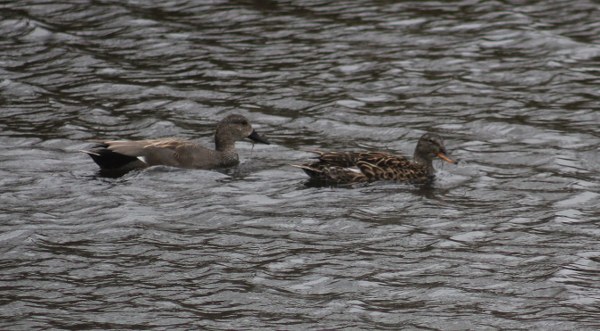
Also on view from Ramsdales were several pairs of Teal, ever excitable Lapwing and a couple of pairs of Gadwall. 
Pair of Gadwall from Ramsdales Hide
Moving on from Ramsdales and a good walk round to Teal Hide along well made paths, allegedly liable to flooding, there was a good variety of more common birds singing in the trees, Blue Tit, Great Tit, Wren and the ubiquitous Robin.
Co-operative Robin

It was along this path that I also got a sighting AND a picture of... A Kingfisher!

My First Kingfisher!

OK OK, so I know that's cheating, but it was a start.. The question remained; would I get a better opportunity, and a real bird, during my travels??
From Lapwing Hide, I could see... nothing, not a sausage, not a Lapwing, not even a Canada Goose! So onwards once more, this time heading for Bunting Hide, and the feeding station.

Once inside Bunting Hide, I was stunned. I have seen perhaps 6 Bullfinch in all my life, 2 at Leighton Moss which were spooked by a Sparrowhawk, a pair in my garden early in 2011 and a couple at a campsite in North Wales, also last year. But here, from just one hide, I could see perhaps a dozen! 12+ Bullfinch, all around me! 

A glut of Bullfinch!

It was difficult to watch them, as they flitted around, I was spoiled for choice as to where to point the camera next! I always aim to try and get more 'natural' looking shots, but when 2 pairs landed on one of the seed-tables at once I just had to break my own rules!

Also hanging aorund the feeding station were a couple of Greenfinch, several Reed Bunting
Blackbird, Magpie, Blue Tit, Great Tit and a pair of Willow Tit.

Reed Bunting from the aptly named Bunting Hide

Magpie from Bunting Hide

Bird of the Day - without doubt the Bullfinch! After the view from the feeding station I had to admit defeat as my fingers were going so numb I could hardly hold the camera, let alone press the shutter! Considering the weather, today was a very worthwhile explorative trip and I will definately be returning once we have more 'reliable' weather and favourable light.